
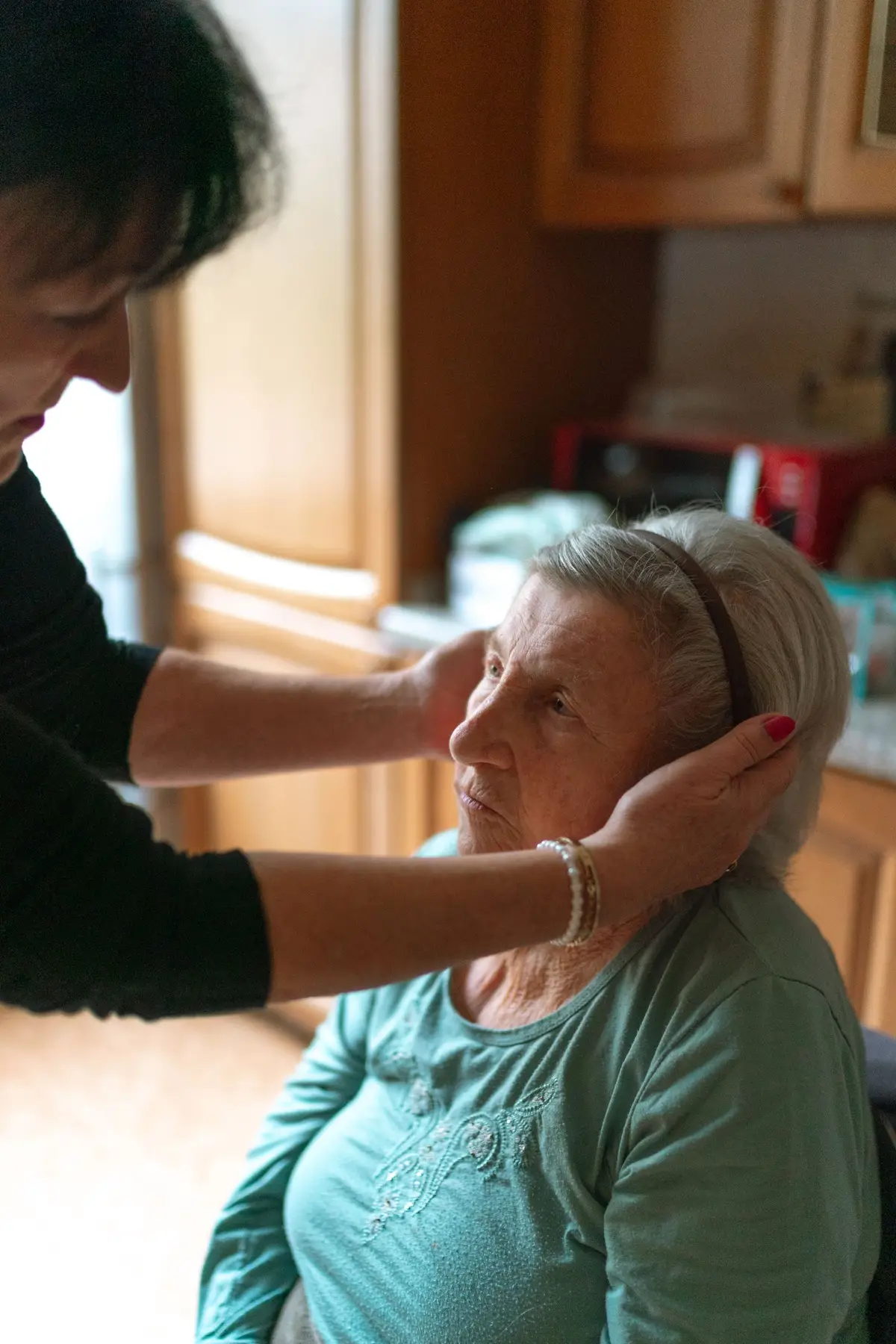
Before you say anything: three pieces of homework
AARP's caregiving guidance on difficult family conversations puts preparation first: observe specific, objective details, and research realistic alternatives before you propose a change. For a bathroom conversation, that means three things.
- Write down what you actually saw. "Dad held the sink to get out of the tub on Sunday" is something he can respond to. "You're unsteady" is a judgment he can deny. Our warning signs guide lists what to look for.
- Know the options and the rough costs. Grab bars, a tub bench, a handheld shower, a walk-in tub, a shower conversion. Parents often resist because they picture something clinical or ruinously expensive. Being able to say "there are a few levels of this" lowers the stakes.
- Get the siblings aligned first. If one child says "walk-in tub" and another says "you're fine, Mom," your parent will pick the answer they like. Settle disagreements among yourselves before the family meeting.
Opening lines that tend to work
The National Institute on Aging suggests mentioning your worry without sounding critical, then trying to meet your parent's own wishes with practical help. AARP recommends speaking from your own perspective ("I" statements) and, if a direct approach feels too heavy, coming at the subject sideways through a news story, a friend's experience or something you read. Here are lines built on that advice. Adjust the words to sound like you.
When you have seen something specific:
"When I was here last week, I saw you hold the towel bar to step out of the tub. Those bars aren't made to hold anyone up, and I keep thinking about it. How does getting in and out feel to you these days?"
When you want to start sideways:
"I read a story about a woman your age who slipped getting out of her tub. It got me thinking about you. Is there anything in your bathroom that bugs you or feels tricky?"
When your parent values independence above all:
"I love that you're still running your own house, and I want to help keep it that way. What would make bathing easier so you never have to wait for one of us to be here?"
When the subject is cost:
"We've talked as a family and we'd like to help with this. Would you be open to looking at a few options with me, just to see what they cost? No decisions today."
What not to say, and what to say instead
| Instead of | Try |
|---|---|
| "You need a walk-in tub." | "What do you think would make the bath easier?" |
| "You're going to fall and break a hip." | "I worry about you when nobody else is in the house." |
| "We've already decided." | "Here are a few options we found. Which ones would you even consider?" |
| "It's not safe for you to live alone." | "What would help you keep living here the way you want?" |
| "The doctor says you have to." | "Would you be willing to ask your doctor what they think? I'll come with you." |
The pattern is the same in every row: your parent keeps the decision. AARP's advice is to approach with love and support and to treat the family as a team with a shared goal, which in this case is your parent staying safely in the home they chose.
Listen for the real objection
"I'm fine" is rarely the whole answer. Underneath it there is usually a specific worry, and each one has a different response.
- "It'll look like a hospital." Many walk-in tubs and showers come in standard white acrylic with ordinary fixtures. Look at photos together and let your parent choose finishes.
- "It's too expensive." Share what you have learned about costs and family help. Our paying-for-it guide covers how siblings split costs and the tax rules for medical home modifications.
- "I don't want strangers in my house." Offer to be there for the measuring and the installation, or arrange for a trusted relative or neighbor to be.
- "I'll lose my bath." If your parent loves to soak, a walk-in tub keeps the soak. If they would rather shower, a low or no-threshold shower may please them more. Ask.
- "This is the beginning of the end." Name it gently. A bathroom change is usually what lets people stay home, not the first step toward leaving it.
Aging Safely Baths has written about the emotional side of bathing and dignity as people age, which can help you understand what your parent may be feeling.
Bringing siblings and other helpers in
NIA's guidance on sharing caregiving responsibilities suggests a meeting or conference call with the older person and everyone who will be involved, held when there is no emergency. It recommends naming one primary caregiver, then dividing tasks by what each person is good at. For a bathroom project, a split might look like this:
- The one who lives closest: attends the occupational therapy visit, the measuring and installation day.
- The organized one: collects quotes, compares them line by line, and keeps a shared document.
- The one good with numbers: works out the cost split and checks the tax and insurance angles.
- The one your parent listens to: leads the conversation itself.
NIA also offers a free worksheet for coordinating caregiving responsibilities, and our family decision checklist keeps everyone working from the same list.
When the answer is no
An adult with sound judgment has the right to make choices their children disagree with. Unless there is an immediate danger, a no today is not the end. AARP's guidance is to expect several conversations, to be willing to compromise, and to be gentle with yourself.
- Offer the smallest step. Grab bars and a bath bench are hard to refuse and can be done in an afternoon.
- Bring in a respected voice. A doctor or occupational therapist recommending a change carries different weight than a son or daughter.
- Agree on a trigger. "If you have another slip, will you look at options with me?" turns a standoff into a plan.
- Use a neutral facilitator if the family is stuck. AARP mentions geriatric care managers and eldercare mediators.
If you are worried about your parent's safety right now, for example after a fall with an injury, or signs of confusion or self-neglect, contact their doctor promptly. The Eldercare Locator at 800-677-1116 can connect you with local services.
Questions families ask
How do I bring up bathroom safety without offending my parent?
Start with something specific you saw and with your own feelings, not a verdict. "I noticed the towel bar is loose, and I worry about you in there" lands better than "You need a walk-in tub." Ask what they think would help before offering your ideas, and come with real options, as AARP advises.
What if my parent refuses to change anything?
Unless there is an immediate danger, accept the no for now and keep the door open. Offer the smallest step, such as grab bars, a bath bench or a doctor visit. Many parents agree after several conversations, and a respected third party such as their doctor or an occupational therapist often helps.
Should siblings all be on the call?
Agree among yourselves first, then talk with your parent. NIA suggests a family meeting with the older person and everyone involved, held when there is no emergency, and naming one primary caregiver who can step in quickly if needed.
When is the best time to have this talk?
Before a crisis, when nobody is tired or upset, and in person if possible. A visit, a calm afternoon, or a natural opening like a friend's fall or a news story works better than the hospital waiting room.
Who else can help if my parent will not listen to me?
Their doctor, an occupational therapist, a geriatric care manager, a faith leader, or a sibling they trust. AARP also suggests a neutral facilitator such as a care manager or eldercare mediator when a family is stuck.
Sources
- Amy Goyer, AARP, 6 Tips for Difficult Family Caregiving Conversations (updated August 2026).
- AARP, How to Care for an Aging Parent Who Resists Help.
- National Institute on Aging, Does an Older Adult in Your Life Need Help?
- National Institute on Aging, Sharing Caregiving Responsibilities.
- Eldercare Locator, eldercare.acl.gov, 800-677-1116.
Facts checked October 15, 2026.