
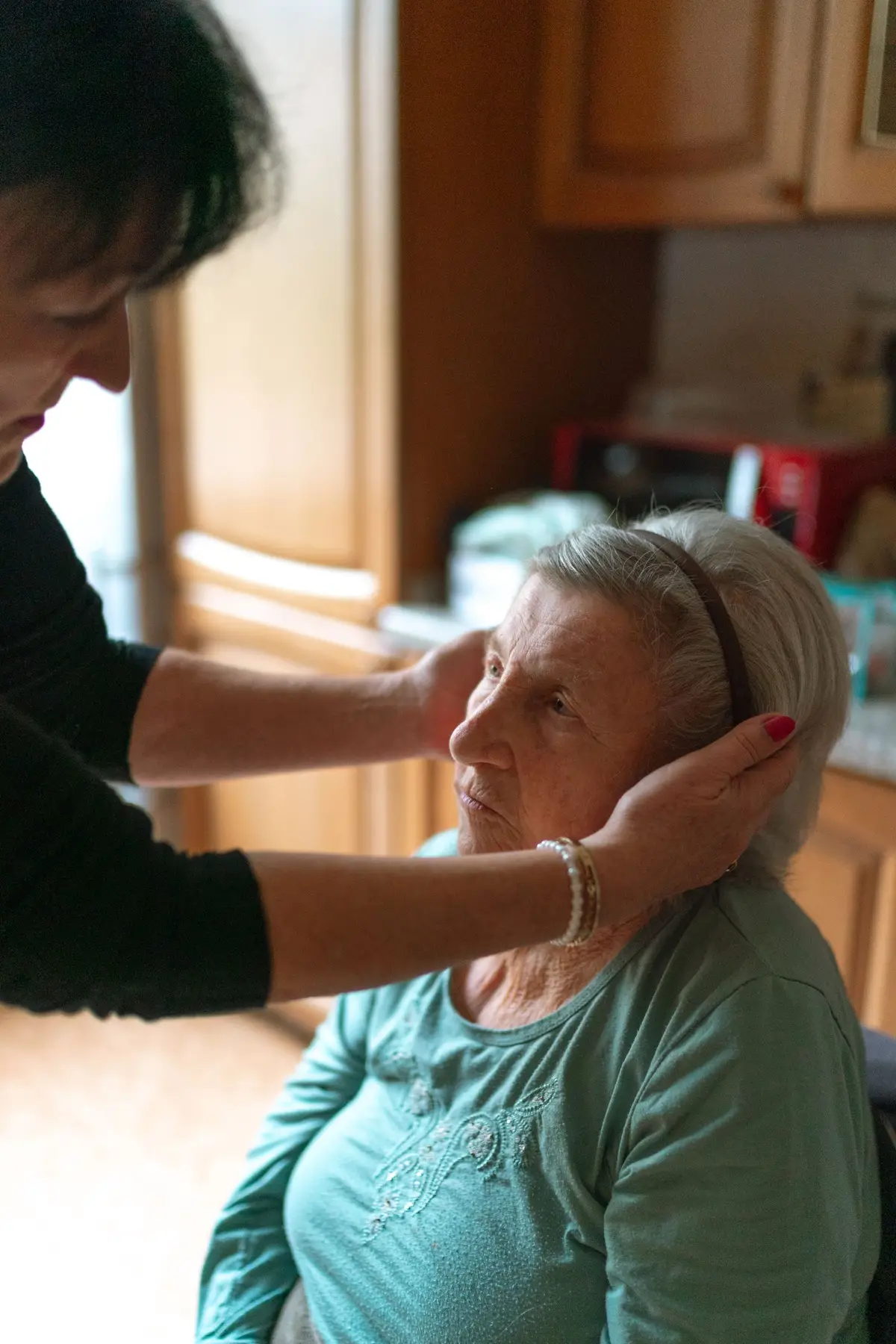
Before bath time: set up the room
- Warm the room first. Older adults often feel cold quickly. Close the door and let the room warm up before your parent undresses.
- Gather everything. Towels, a robe, clean clothes, soap, shampoo and skin cream should be within reach before your parent sits down, so you never need to step away.
- Check the floor. The National Institute on Aging recommends nonskid mats, strips or carpet on every surface that may get wet. Use a nonslip mat inside the tub and a rubber-backed mat outside it, and remove loose rugs.
- Check the water heater setting. The U.S. Consumer Product Safety Commission recommends 120°F to lower the risk of tap water scalds.
- Choose the time of day when your parent has the most energy. A predictable routine helps, especially for someone living with memory changes.
During the bath: help without taking over
Dignity is mostly about control. The more your parent decides and does, the less the bath feels like something being done to them.
- Ask, don't announce. "Would you like to start with your hair or your arms?" gives a choice. Small choices add up.
- Let them do what they can. Washing their own face, arms and front keeps strength and self-respect. Offer help with the back, feet and hair.
- Explain each step before you do it, especially if your parent has memory changes. Surprises cause anxiety.
- Keep them covered. A towel across the lap or shoulders while you work keeps your parent warm and private. Uncover only the area being washed.
- Test the water yourself, with a bath thermometer or the inside of your wrist. Your parent may not sense heat as quickly as you do.
- Stay close. Do not leave someone who is unsteady alone in the bath, even for a minute.
- Keep the talk ordinary. Chatting about the day, the grandkids or the ball game makes the moment feel less clinical than silence.
If your parent is living with dementia, bathing can bring extra fear and resistance. Our sister site has a detailed caregiver's guide to bathing and dementia.
After the bath: the riskiest moment
Standing up from a wet tub is when many slips happen. Drain the water first, then help your parent stand slowly using a grab bar, never a towel bar or the edge of the sink. Have the towel or robe ready so they are not standing wet and cold. Dry skin folds and between the toes carefully, and look for redness, sores or bruises worth mentioning to their doctor.
If your parent feels light-headed when standing after a warm bath, have them sit for a minute before getting up. Mention it to the doctor, since some medicines and conditions make it more likely.
Equipment that makes a real difference
- Grab bars anchored into wall studs. CDC's fall prevention guidance for family caregivers recommends them next to and inside the tub and next to the toilet.
- A tub transfer bench or shower chair, so your parent can sit instead of lowering to the tub floor.
- A handheld shower on a slide bar, so you can rinse without asking them to stand.
- Long-handled sponges that let your parent wash their own legs and back.
- A night light on the route from bed to bathroom.
Signs the tub itself is the problem
Safety aids help, but they cannot lower a tub wall. If your parent needs to be lifted over the edge, cannot get up from the tub floor, or has started avoiding baths altogether, it is time to look at a different setup. Our warning signs guide goes through what each sign means.
A walk-in tub has a door and a built-in seat at about chair height, so your parent can walk in, sit down and close the door before the water fills. For helpers, a tub with an outward-swinging door and room beside it is easier to assist with. If your parent uses a wheelchair or cannot step over even a low threshold, a curbless roll-in shower may be a better fit. When you get to that point, talk it through with your parent first.
Aging Safely Baths has written about how bathing affects dignity and confidence in later life, which is worth reading if your parent has become withdrawn about bathing.
Take care of yourself, too
Lifting and bending in a small bathroom can strain your back. If bathing has become physically hard for you, ask your parent's doctor about home health aide visits, or call the Eldercare Locator at 800-677-1116 to reach the local Area Agency on Aging and learn about in-home help. NIA's caregiving guidance also points to respite options, from a volunteer or in-home aide to adult day programs, that give the main caregiver a break. Accepting help keeps both of you safer.
Questions families ask
How often does an elderly person need a full bath?
Many older adults do not need a full bath every day, especially if skin is dry. A sponge bath at the sink in between can keep them clean and comfortable. Ask their doctor or nurse what is right for your parent, particularly if they have skin problems or incontinence.
What water temperature is safe for an older adult's bath?
Test it yourself with a bath thermometer or the inside of your wrist. The U.S. Consumer Product Safety Commission recommends setting water heaters to 120°F to lower the risk of scalds, and older skin can burn more easily.
My parent refuses to bathe. What can I do?
Look for the reason: fear of falling, feeling cold, embarrassment, tiredness or low mood. Try a different time of day, warm the room, offer a seat and a handheld shower, and keep them covered. If refusal is new or comes with confusion, mention it to their doctor.
When should a caregiver stop lifting a parent in and out of the tub?
As soon as it takes real lifting. Lifting a person over a tub wall can injure you both. Ask the doctor about an occupational therapy evaluation and consider a transfer bench, a walk-in tub or a roll-in shower.
Sources
- National Institute on Aging, Preventing Falls at Home: Room by Room.
- Centers for Disease Control and Prevention, STEADI, Family Caregivers: Protect Your Loved Ones from Falling.
- U.S. Consumer Product Safety Commission, Avoiding Tap Water Scalds (Publication 5098).
- National Institute on Aging, Sharing Caregiving Responsibilities.
Facts checked October 15, 2026.