
What a long-distance caregiver can realistically do
The National Institute on Aging describes long-distance caregivers taking on roles like helping with finances and insurance, arranging in-home care, ordering medical equipment and supplies, and acting as the family's information coordinator. A bathroom project fits naturally into that last role. You may not hold the tape measure, but you can be the person who gathers the facts, compares the options and keeps everyone informed.
Most families also have someone closer by doing more of the day-to-day help. NIA notes that the primary caregiver is often a spouse or the child who lives nearest, and that those farther away can support them with regular contact, respite visits and coordination. Lightening their load on a project like this is a real contribution.
Use your visits to see what phone calls hide
NIA suggests talking with your parent before a visit to learn what they want to do, checking with the primary caregiver about what they need, and setting a few clear goals rather than trying to do everything. For bathroom safety, put these on your list:
- Watch, without hovering, how your parent gets in and out of the tub or shower if they are comfortable with that, or ask them to show you how they do it.
- Check towel bars, the sink edge and the shower door for signs they are being used as handholds.
- Look at the bath mat, lighting, and the path from bed to bathroom at night.
- Read the label on the water heater: its capacity in gallons and its age.
- Take photos and measurements while you are there (see below).
- Make time for something that has nothing to do with caregiving. NIA makes the same point: a movie, a drive, a meal out.
Our warning signs guide explains what each of these observations usually means.
Measuring and photographing by video call
If you cannot be there, a 20-minute video call with your parent or a local helper holding the phone can collect almost everything an estimator needs. Ask them to use a metal tape measure and to read each number out loud while you write it down.
| Item | Why it matters |
|---|---|
| Tub alcove length, width and wall height | Walk-in tubs come in set sizes; this decides which models fit without moving walls |
| Width of every doorway and hallway on the route in | The tub has to travel through them in one piece |
| Photo of the faucet wall and the drain end | Shows plumbing location and whether the drain is on the left or right |
| Photo of the nearest electrical outlet | Heated seats and jets need power, sometimes a dedicated circuit |
| Water heater label (gallons, age) | A deep tub needs enough hot water to fill in one go |
| Wide photo of the whole bathroom | Shows room for a helper to stand and for the door to swing |
Aging Safely Baths can work from these: its virtual estimate lets you upload photos of the current tub or shower and get an itemized quote without an in-home sales visit, which also spares your parent a high-pressure pitch while you are not there.
Keep the whole family on the same page
NIA recommends a shared list of phone numbers and emails, and a shared online calendar so caregivers can coordinate. For this project, add a shared folder with:
- The measurements and photos
- Each written quote, side by side
- Any doctor or occupational therapist notes
- The signed contract, deposit receipt and warranty documents
- The cost-sharing agreement between siblings (see paying for it as a family)
With your parent's permission, NIA also suggests joining their telehealth visits. That is a good moment to ask the doctor about an occupational therapy home safety evaluation.
Installation day: who should be there
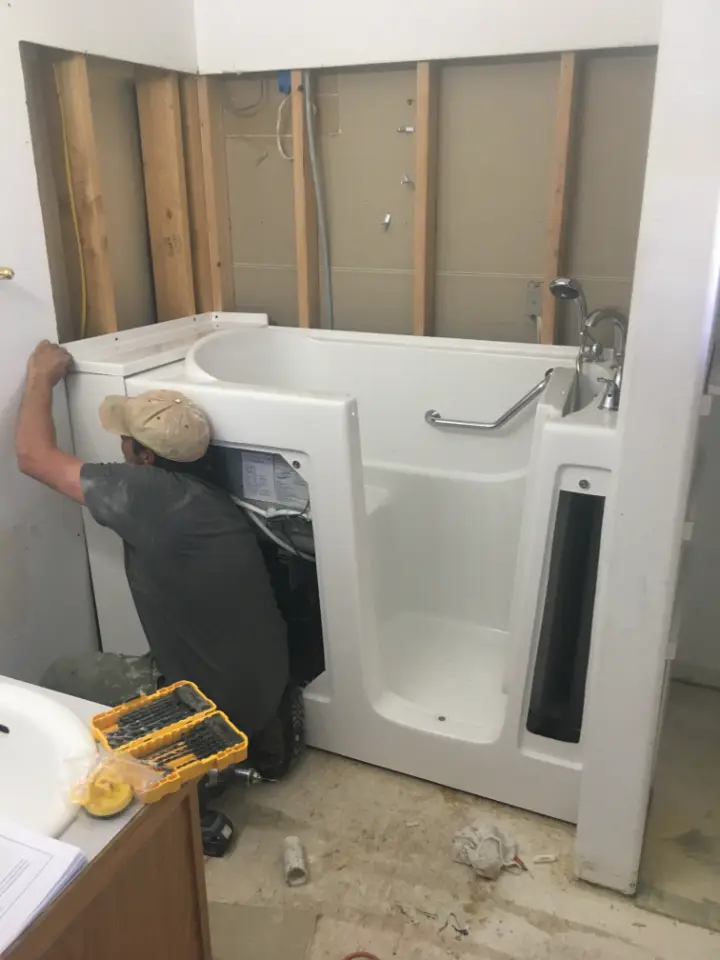
Many walk-in tub installations take one day, but it is a loud, dusty day with strangers in the house. Your parent should not have to manage it alone. Arrange for a relative, neighbor or friend to:
- Let the crew in and confirm the scope with the lead installer.
- Keep your parent comfortable in another room, or take them out for the day.
- Video call you before the crew leaves, so you can see the finished tub, the door seal, and the drain working.
- Stay for the first bath, or at least the first fill and drain, so your parent learns the controls with someone there.
If you want a sense of how the day usually runs, Aging Safely Baths describes a walk-in tub installation day hour by hour.
After the install: checking in from afar
- Ask open questions on calls: "How was your bath this week?" works better than "Are you using the tub?"
- Ask the local helper to check that the door seal stays clean and the drain stays quick.
- Keep an eye on the other risks NIA and CDC mention: lighting, loose rugs, medicines that cause dizziness.
- If your parent needs bathing help that equipment cannot solve, the Eldercare Locator (800-677-1116) can connect you with in-home care options near them.
Questions families ask
Can I arrange a walk-in tub for my parent if I live in another state?
Yes. You can collect measurements and photos by video call, get written quotes without an in-home sales visit, review contracts by email, and arrange for a relative, neighbor or friend to be at the house on installation day. Your parent should still agree to the plan and sign or approve the contract.
How do I know if my parent is safe in the bathroom when I cannot visit often?
NIA notes that phone calls are not always enough to tell. With your parent's permission, ask neighbors, friends, local relatives or their doctor to tell you about concerns, and plan visits with time to see the bathroom and how your parent moves.
What should I measure for a walk-in tub quote?
The length, width and height of the current tub alcove, the width of every doorway and hallway on the way to the bathroom, where the drain sits, and whether there is an outlet nearby. Photos of the tub, the faucet wall, and the water heater label help an estimator spot problems early.
Should someone be at the house on installation day?
Yes. Your parent should not have to manage the crew alone. A trusted person can let the installers in, keep your parent comfortable away from the noise, check the work before the crew leaves, and help with the first bath.
What help is available near my parent?
Call the Eldercare Locator at 800-677-1116 or visit eldercare.acl.gov to reach the local Area Agency on Aging, which can point you to in-home help, transportation and home modification programs.
Sources
- National Institute on Aging, What Is Long-Distance Caregiving?
- National Institute on Aging, Long-Distance Caregiving: How Can I Help if I'm Far Away?
- National Institute on Aging, Does an Older Adult in Your Life Need Help?
- Eldercare Locator, eldercare.acl.gov, 800-677-1116.
Facts checked October 15, 2026.